
ANEW: The Messy Start
On Learning to Receive What's Actually There

Beginning anything and sticking with it can be hard.
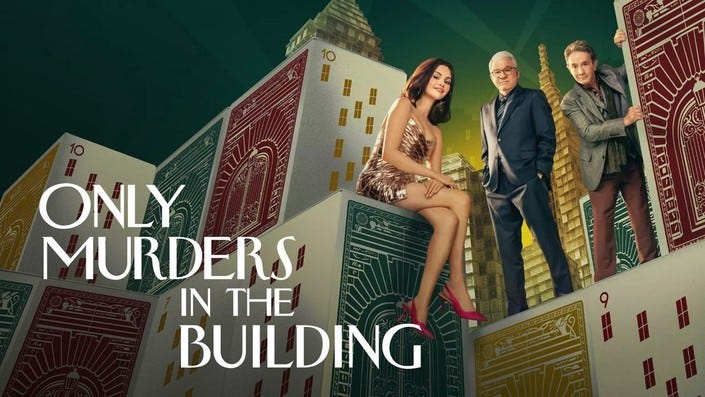
I tried two or three times to get into Season 1 of Only Murders in the Building. What tripped me up first was Selena Gomez’s voice — strained in a way I couldn’t quite place. Stuffed up, I thought. Like someone pushing through a bad cold, straining to be heard. I loved the opening credits, though. That ghostly, whimsical hum over images that looked like miniature knick-knacks from those kits adults buy at Michael’s — the craft store. Charming and a little creepy at the same time. But Gomez’s voice kept pulling me out of it. Until I Googled her, found out about the lupus, and understood that her throat swelling is simply part of who she is now. Suddenly, nothing was wrong with her voice. Everything had been wrong with my listening.
That distinction matters more than I first gave it credit for.
I debate getting into a new television show the way some people debate taking a trip. There is the sunk cost of the thing — the hours you won’t get back if the connection never comes — and then there is the deeper question of whether you can find some real purchase in the experience. Human connection. The artistry of it all. Both require a kind of discernment that is, itself, a commitment. As much as I loved The Bear, Ted Lasso, and True Detective: Night Country, what I loved most wasn’t the shows themselves — it was what happened when I gave myself over to them. Chicago. Richmond (UK). Ennis (Alaska). Those places and those people became part of my interior geography. You don’t get that by dipping your toe in. You get that by letting the water rise.
Now I am at the beginning of Season 2 of Only Murders, and the flywheel effect has taken hold — the point where the early friction gives way and the thing starts moving on its own momentum. I am not on the edge of my seat, exactly. But I am no longer fighting the experience, either. The characters have started to reveal themselves. The plotlines are forming. I find myself looking forward to the next episode the way you look forward to a conversation with someone you are just beginning to trust.
Life is like that, too. I have always been a committed fan of beginnings and endings — takeoffs and landings, as it were. The bumpy, disorienting in-between is harder for me. Getting used to a new voice is harder for me.
I have been working in schools for thirty-seven years, and what I can tell you with some certainty is that the new beginning is both the gift and the tax. In boarding schools, parents stay at arm’s length, which creates a healthy distance from the daily work of children to young adults, becoming different people. In the day school where I work now — five-year-olds to fourteen-year-olds in a religious school — parents and teachers see the same incremental changes almost in real time. We compare notes. We watch children grow in confidence and awareness, watching them push against what they can’t do yet on the way to what they will eventually be able to do.

Last fall, a second grader sat in my office, his face so contorted in pain that he was barely recognizable as the same boy I watched climb out of his car seat from his dad’s car every morning. With me that day, he could not admit what he had done wrong, because the admission would have violated something deep in his understanding of who he was — who maybe his parents had always told him he was. Seven years old, and already the performance of self was cracking under the weight of one small human mistake.
Months later, he let it go. The idea of perfection. The gifted and talented. Whatever story he had been told about himself. And once he did, something in him loosened. In my school, we say the work of repairing the world begins with the self. That boy knew it before most adults do.
Being new to a community at the very beginning was like watching a television show you are still trying to love through the messy first act. The voices sound strained. The plotlines don’t cohere yet. You catch yourself wondering if you made a mistake getting in at all.
But here is what I have learned months later, and after thirty-seven years of new beginnings in schools and all the other places life has asked me to start over: you don’t fall in love with a place or a person or a show in the first episode. You fall in love somewhere in the middle, when you weren’t even paying attention. When the character does something small and true, and you think, ‘Oh. There you are. That’s who you actually are.’
Selena Gomez’s voice didn’t change. I did. I stopped listening for what I expected and started hearing what was actually there. That is the whole of it, really; the secret inside every new beginning, whether it’s a school, a community, a relationship, or forty-five minutes on a Tuesday night with a murder mystery set in a Manhattan apartment building. You have to be willing to let the thing teach you how to receive it.
The real life lesson, as it turns out, was never in the escape.
It was in the staying.
Curated Listening:
The opening theme for Only Murders in the Building is one of those rare television earworms that does exactly what great music is supposed to do; it tells you how to feel before a single word is spoken. Composer Siddhartha Khosla drew from the haunting Bollywood cassette tapes his parents brought from India in the late 1970s, then layered in the sound of New York itself: paint buckets struck like subway drums, cello, piano, and cat-like screeches of discovered danger. Listen to the Main Title theme HERE. And here is longer-form information about the composer and their inspiration HERE.
Supporting = Loving
Thank you for walking with ANEW — an invitation
ANEW
If you’ve been here for any length of time, you already know this space was never meant to be fast or loud. It is meant to be attentive. Reflective. Human.
LitShop is here:
ANEW is a place to think out loud about education, leadership, creativity, memory, and what it means to keep becoming—together. My hope is that something here has helped you feel more awake to your own thinking, your own work, your own becoming.
As a gesture of thanks—and as a way to sustain this work—I’m offering a limited-time special rate on a paid ANEW subscription for readers who want to go a little deeper.
Redeem your special offer here →
What a paid ANEW subscription supports and unlocks:
Subscriber-only video essays and talks — longer, more personal reflections I don’t publish publicly, released every fourth Wednesday of each month.
Full archive access — the complete ANEW body of work, including curated listening and audio pieces.
Founding Members — a signed, personalized copy of my forthcoming novel, MANCHILD AT YALE (Fall 2026).
There’s one more thing that matters to say plainly.
Half of all paid subscription revenue continues to be directed to charitable causes—particularly those focused on children, education, and community well-being. That commitment isn’t new. It’s part of why ANEW exists.
For this season, we are proudly supporting:
LitShop — St. Louis, Missouri
DONATE NOW TO LITSHOP →
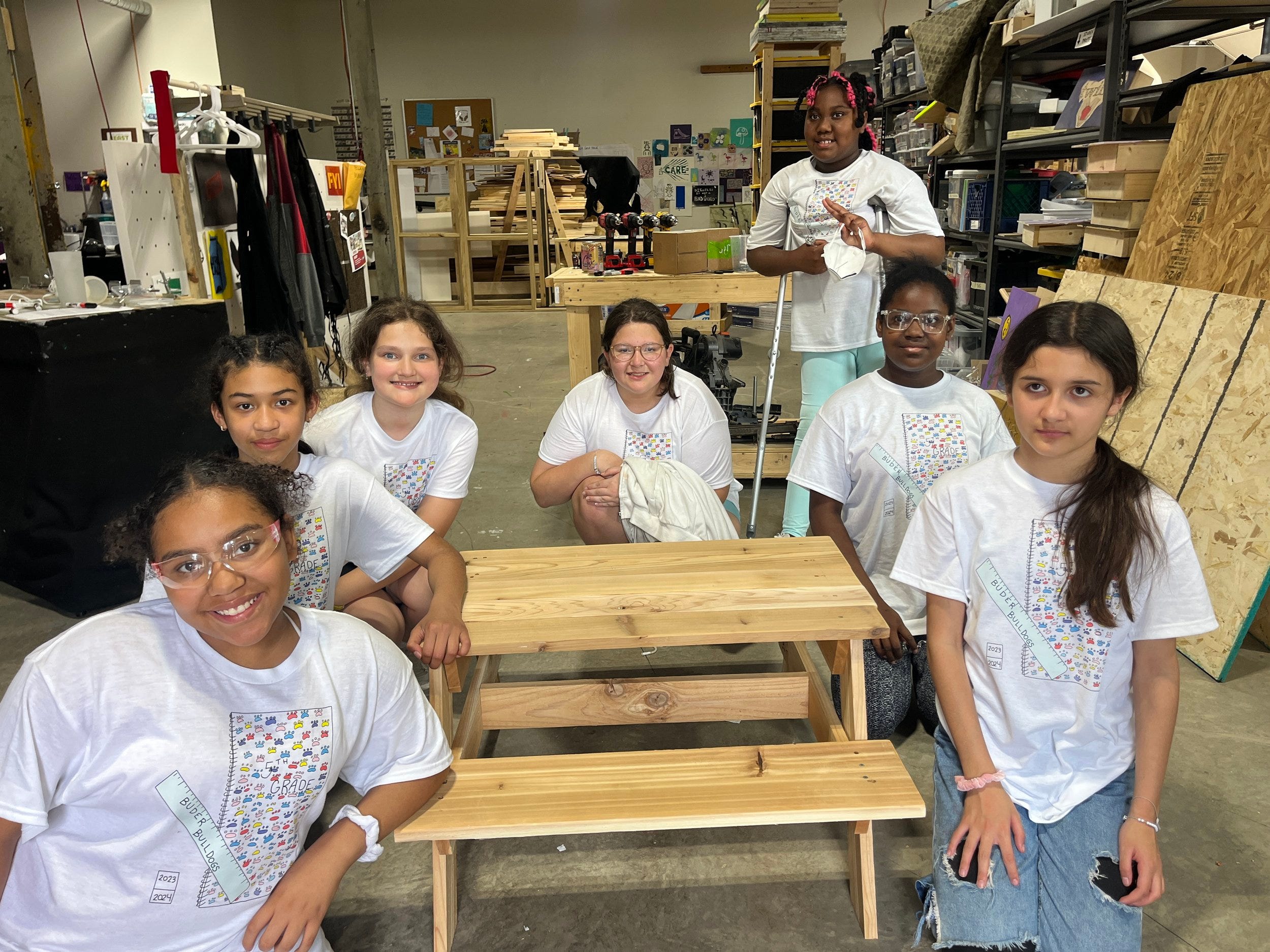
There are places that understand something essential about young people—that before you can ask them to master the world, you have to give them space to imagine it.
LitShop is one of those places.
Founded right here in St. Louis, LitShop is equal parts workshop and sanctuary—a space where adolescent girls* are not told who to be, but are invited to discover it for themselves. Not through abstraction. Not through theory. But through the deeply human acts of reading, writing, building, making, failing, trying again, and lifting one another along the way.
This is literacy as lived experience.
A story in one hand. A tool in the other.
In a 2,300-square-foot space in Botanical Heights, something powerful is happening every day. Girls are writing their own narratives while quite literally shaping the world around them—cutting wood, designing projects, solving problems that matter in their own communities. They are learning that their voices carry weight. That their ideas can take form. That collaboration is not just encouraged—it is expected.
And maybe most importantly, they are learning that they belong.
LitShop is intentionally built as an inclusive space, one that reflects the full spectrum of what it means to be a girl*. Cis, trans, non-binary, gender-expansive—this is a community where identity is not questioned, but honored. Where difference is not managed, but celebrated. Where young people can show up as they are and grow into who they are becoming.
Your support helps make that real in tangible ways:
Programs that blend literacy with hands-on building and design
A makerspace and woodshop where ideas become objects—and confidence follows
A literacy lab that fosters joyful reading, shared stories, and lifelong habits
A community of mentors and peers who model strength, care, and possibility
Expanded access to programming so more girls across St. Louis can participate
Growth toward full-time staffing to deepen and sustain the work
This is not enrichment for enrichment’s sake.
This is identity work.
This is confidence work.
This is the quiet, necessary work of ensuring that young people—especially those too often left at the margins—have the tools, the language, and the belief to shape their own futures.
LitShop is doing what education, at its best, has always been called to do:
not just prepare students for the world as it is—but equip them to build the world as it should be.
What this means for ANEW
Half of every paid ANEW subscription during this season will directly support LitShop—its programs, its space, and the girls it serves.
Please know this:
Supporting ANEW always means supporting children at promise—while sustaining the writing and extending its reach beyond the page.
If you’re already a paid subscriber, thank you. Truly. Your support makes this possible.
And if you’ve been reading quietly and wondering whether to step a little closer—this is an open door.
With gratitude,
Brian