
ANEW: The Table We Need
How are great institutions and cities made?


There is a moment in most conversations when someone’s words knock you back a bit. A quickening. A let’s cut to the chase. Maybe it matches up with what you yourself have been thinking for quite some time. Not because it’s surprising, exactly, but because it’s true in a way that settles onto you like getting under a warm blanket on a crisp night. Yesterday, sitting inside Sasha’s on DeMun in my newly adopted city of St. Louis with colleagues whose work lives at the street corner of literature and community, that moment arrived quietly, almost in passing: We’re shutting people out. Not because they couldn’t do it. Because they think they can’t.
That sentence has been sitting with me for the last two days.
On the surface, we were talking about literary programming and writing for young people. What it looks like when it works, what collapses when it doesn’t, and what it might become if institutions actually trusted one another enough to collaborate. But what we are really talking about is much deeper than writing programs for new writers. We were talking about establishing something great in a city that continues to defy the odds of jaundiced expectations.
The conversation ranged wide: high school students in eight different schools across the city working from the same novel with teachers as guides rather than sages, medical students volunteering for literary arts programs because something in the language of stories was feeding what medicine alone could not, a celebrated university literary center shutting down after years of inspired programming because nobody thought to ask the faculty who were supposed to “execute but not create” what they wanted before mandating their participation. That last one stung a little. You’ve seen these misfires before — a program with a beautiful website, real funding, serious people — gone, not because the idea failed, but because the people closest to it were never invited in. Mandates are lethal injections to creativity and purpose. Ask any first-time writer in Hollywood who moved there to write and later returns home, if they are lucky, a jaded ball of goo with their very soul sucked out of them.
What connects all of these things, I think, is the same question underneath: Who is this for?
The programs (and communities!) that catch fire — and I’ve seen a few — tend to start with a different premise. Not here is the text; now engage with it, but here is something alive; come find yourself in it. The literary festival I watched a colleague build at a Bay Area independent school years ago brought in signature names but gave equal weight to local writers, genre writers, the romance novelist with twenty-five books and a devoted readership who would never have been invited to a university stage. The idea was abundance, not gatekeeping. You could find yourself there no matter where you were coming from.
That model stays with me. And it feels urgently needed right now.
We are living through a moment when AI is reshaping not just the job market but the question of what it means to be educated. The schools that seem most clear-eyed about this — the ones where I’ve seen students genuinely thinking — are doubling down on the humanities, not retreating from them. Handwritten papers. Live presentations. The demand that a student be able to look you in the eye and tell you what they believe and why. The irony is that the machines have made humans irreplaceable. That is, of course, if we insist on it.
This is where literary programming — real literary programming, rooted in community and not just credentials — becomes essential infrastructure. I don’t mean optional enrichment where you get half-hearted entertainment. I mean the kind of intentional spaces where a high school student in an underfunded city school can discover what it means to engage with the power of words alongside a medical student who reads poetry between rounds, alongside a retired accountant who never once thought of herself as a reader — all of them in the same room with a writer, recognizing something of themselves in the work. Holding and building community requires that you do away with labels and invite in people who may have never seen themselves as an integral part of a living writing community. You work from the ground up. You start with the question of who isn’t in the room yet.
So what would it take?
Faculty involvement and focused mentoring, from the beginning. I’m not talking about mandates handed down from a dean but a genuine invitation: help us design this; your instincts matter here. Collaboration across institutions that have historically operated in parallel rather than in concert. We have several strong ones in and around this region: universities and independent schools, medical schools and arts centers, community foundations and the public library two miles away. My new colleague suggested something like a council of advisors, deliberately drawn from voices that don’t usually end up in those rooms. These truly could be ordinary folks — community members, teachers, readers who’ve never been asked.
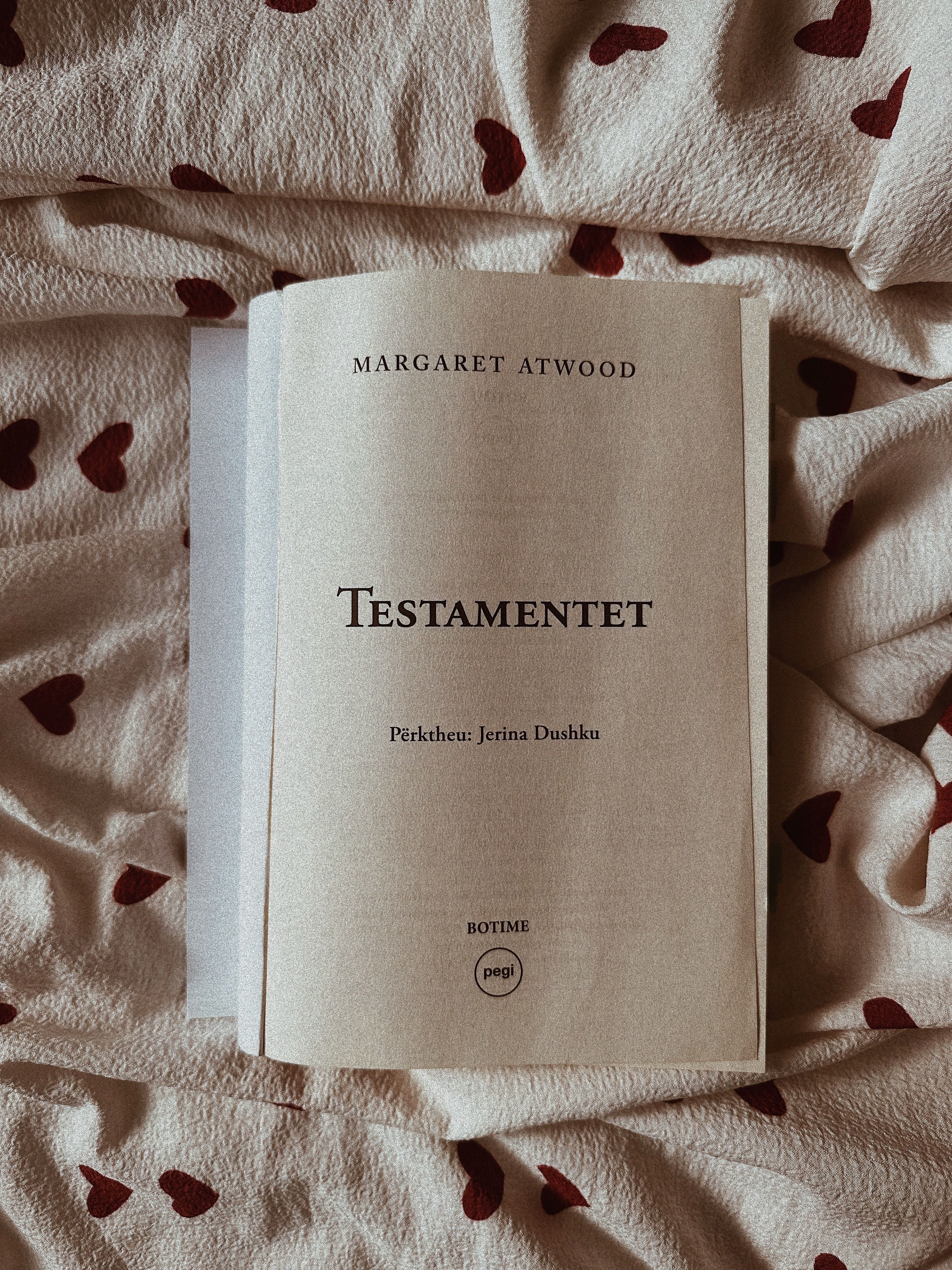
And the writers themselves. Not just the famous ones, though yes, them too. But the ones willing to linger after the reading, to sit with the high school group, to do the student interview before they do the keynote. My new friend talked about the inspired and inspiring writers of the world — a person like Margaret Atwood, who arrived in St. Louis actually wanting to understand it, scrapping her prepared remarks after a long conversation in the car on the way from the airport because something she discovered along the way felt more urgent. This is what true transformation is supposed to look like.
There is something worth naming about the moment we’re in. The Washington University literary center I heard about from my new friend was visionary on paper. It is gone now. The decision to scrap it was a casualty of a political climate that made people afraid to rock the boat, and before that, a failure of trust. Nobody asked the teachers what they thought or how they felt. Nobody built the table together before filling the chairs.
I’ve made that mistake. I’ve watched others make it. The table has to be built together, or it won’t hold the weight of what we’re trying to put on it.
The conversation yesterday ended the way the best ones do. No resolution, just more questions, more names, more threads worth following. A St. Louis that actually sees itself as a literary city. Programs that belong to the whole community, not just the campus. Writers who leave this place having learned something from it.
What if that were the norm? What if that were the table?
May it always be so.
Curated Listening:
The ultimate dejection happens when dreams die from the weight of faulty expectations and, sometimes even, brain chemistry. This is something I constantly remind myself about, almost in a coaching-conversation way, whenever I sit down to think and write. My mind turns and returns to Albert Hammond, a guy from the UK who made his one-hit wonder into the ultimate trope for feeling trapped by one’s own longing for more from life. Listen to Albert Hammond sing It Never Rains in Southern California HERE.
Supporting = Loving
Thank you for walking with ANEW — an invitation
If you’ve been here for any length of time, you already know this space was never meant to be fast or loud. It is meant to be attentive. Reflective. Human.
ANEW is a place to think out loud about education, leadership, creativity, memory, and what it means to keep becoming — together. My hope is that something here has helped you feel more awake to your own thinking, your own work, your own becoming.
As a gesture of thanks — and as a way to sustain this work — I’m offering a limited-time special rate on a paid ANEW subscription for readers who want to go a little deeper.
Redeem your special offer here →
What a paid ANEW subscription supports and unlocks:
Subscriber-only video essays and talks — longer, more personal reflections I don’t publish publicly, released every fourth Wednesday of each month.
Full archive access — the complete ANEW body of work, including curated listening and audio pieces.
Founding Members — a signed, personalized copy of my forthcoming novel, MANCHILD AT YALE (Fall 2026).
There’s one more thing that matters to say plainly.
Half of all paid subscription revenue continues to be directed to charitable causes — particularly those focused on children, education, and community well-being. That commitment isn’t new. It’s part of why ANEW exists.
For this season, we are proudly supporting:
Saul Mirowitz Jewish Community School — St. Louis, Missouri
DONATE NOW TO MIROWITZ →
Since the end of July 2025, I have had the privilege of serving as Interim Head of School at Saul Mirowitz Jewish Community School, right here in St. Louis. And what I can tell you — from the inside, from the daily work, from watching my colleagues show up with extraordinary care and purpose every single day — is that this place is something genuinely rare.
Mirowitz is not simply a school. It is a community built on the belief that education, at its most powerful, tends to the whole child. That means academic excellence and intellectual rigor, yes — but it also means nurturing Jewish identity, instilling values, and creating a space where every student knows they are seen, known, and deeply belonging.
I first visited the school in 2017 when my friend and then Head of School, Cheryl Maayan, invited me in to see how incredibly special the school was. I was the Assistant Head at another school in the region at the time. The work, then, as it is now, is important and vibrant, creating joyful learners who will help heal the world (tikkun olam) and strengthen their identities, making the world a better place.
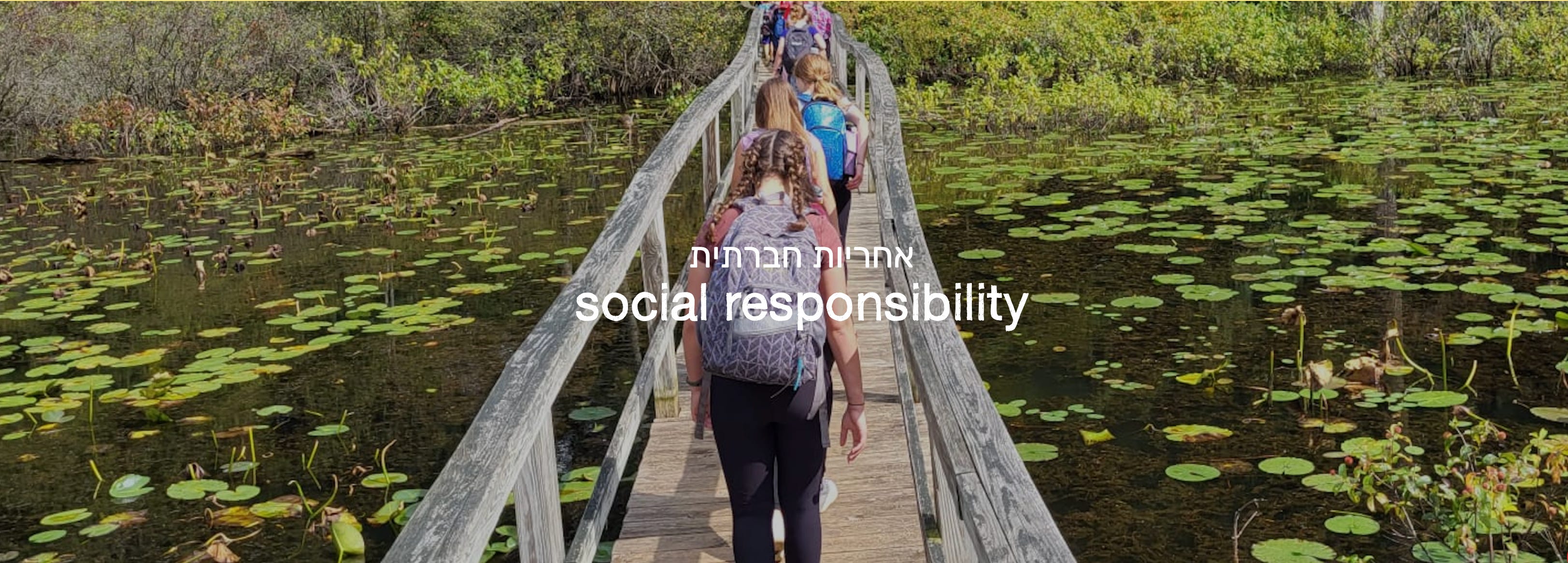
Being the Interim Head of Mirowitz is like helping a community heal and grow. What my colleagues and I do together every day is not small work, especially as we look beyond our own bubble. It is the kind of work that asks everything of you — your creativity, your patience, your belief that children are capable of more than the world sometimes tells them. We are building something that matters: a school where learning is joyful, where tradition and innovation sit comfortably alongside each other, and where the question of who a child is becoming is taken just as seriously as what they are learning.
Jewish day school education is among the most complete models of whole-child education that exists. At Mirowitz, students don’t just study; they belong. They don’t just achieve; they grow in character. They don’t just graduate; they leave with a foundation that will hold them for a lifetime.
Your support helps make that possible in tangible ways:
Programs that weave together Judaic studies, general academics, and the arts into a seamless and rich daily experience
A school culture where diversity, inclusion, and belonging are not afterthoughts — they are the architecture
Faculty and staff who are among the most dedicated, creative, and compassionate educators I have ever had the privilege of working alongside
Resources that allow us to serve families across the full economic spectrum of our community
The capacity to keep growing — in reach, in depth, and in the quality of what we offer every child who walks through our doors
This is not enrichment for enrichment’s sake. This is identity work. This is community work.
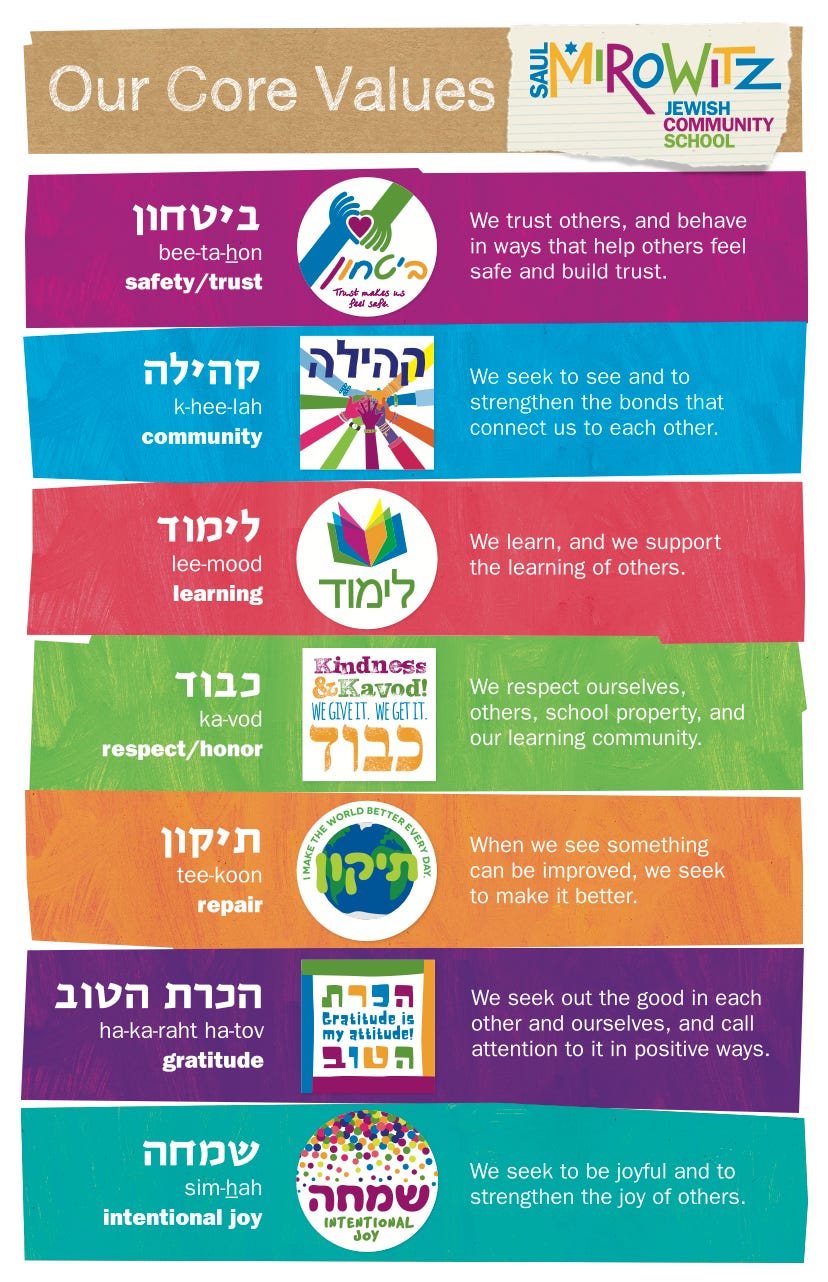
This is the quiet, necessary, and sometimes holy work of ensuring that the next generation has the tools, the language, the roots, and the wings to shape their own futures — and to give back to the world that shaped them.
Mirowitz is doing what education, at its best, has always been called to do: not just prepare students for the world as it is, but equip them to build the world as it should be.
What this means for ANEW
Half of every paid ANEW subscription during this season — through the end of August 2026 — will directly support Saul Mirowitz Jewish Community School — its programs, its people, and the children it serves.
Please know this:
Supporting ANEW always means supporting children at promise — while sustaining the writing and extending its reach beyond the page.
If you’re already a paid subscriber, thank you. Truly. Your support makes this possible.
And if you’ve been reading quietly and wondering whether to step a little closer — this is an open door.
With gratitude,
Brian