
ANEW: Writing Workshop
Creating the discipline in community to be a writer, and other things

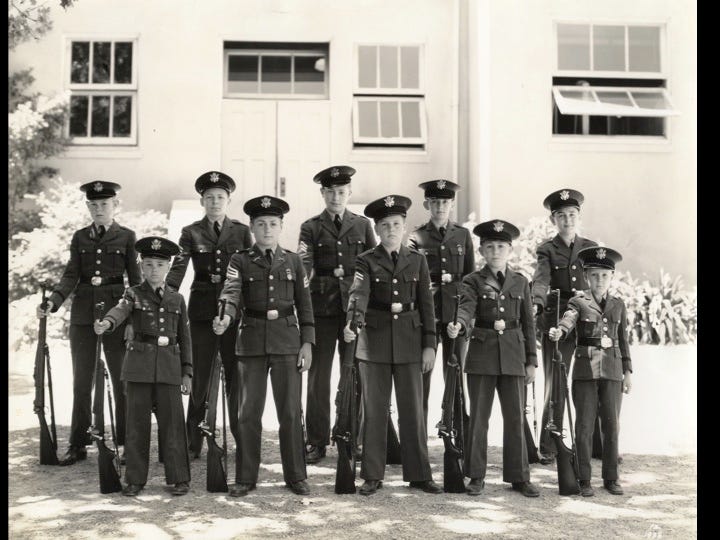
I try to make the connection in my head. How does an old dorm from the pre-Vietnam days become the place where my students and I would learn to set our intentions as writers? Every one of us. It sounds improbable until you sit with it long enough, until the history of a place stops being background noise and starts feeling like something you’re actually inside of.
The building that housed my newly renovated classroom was a shotgun-style barracks — long and narrow — that had once sheltered boys as young as six, dressed as though they were heading off to war. Their parents had a theory: that their sons needed a discipline unavailable at home. Reveille at six, Taps at night, make your bed every morning without being asked. The boys drilled on the parade grounds beneath a giant sequoia that still stood when I arrived decades later, still calling whoever remained to stand at attention beneath its canopy. They fired cannons in front of Foster Hall. They marched in formation until they got it right, and then they marched some more. What those boys became, I mostly don’t know. History swallows them whole, the way it swallows most of us.
By September of 1998, the cannons were long gone. The students who shuffled into that old barracks on a warm California morning were born in the early 1980s — children of an entirely different kind of formation. They wrote about horses, fashion, soccer, and yes, cannabis, among other things. It’s funny how a place rooted in one purpose can quietly—without warning, hype, or fanfare—become something else entirely. The walls don’t mind. The sequoia doesn’t mind. Only the people inside seem to need a reason.

We sat in groups of four. That was the architecture of the class from the very beginning, pulled from Zemelman and Daniels, from the foundational notion that writing is a muscle, and muscles require daily exercise rather than the occasional heroic effort. Every table of four became its own small republic of voices. I gave them prompts. I gave them latitude. I told them the writing didn’t have to be good — it had to be honest, and it had to exist on the page. Those were the only non-negotiable terms. The rest was theirs.
Most of them rose to it, in their way. Some slowly, some with a sudden recklessness that surprised even them. A few found that when you give young people genuine voice and choice in what they say and how they say it, something loosens in them that formal academic writing had spent years tightening back up. That loosening was the whole point. The barracks, with its angular corners and over-bright institutional light, turned out to be exactly the right room for it.
Bryce didn’t loosen.
He sat at his table with the particular stillness of someone who has already decided that what you’re offering doesn’t apply to him. Not hostile; he just wasn’t having it. Maybe skateboarding or on some ski slope in his own mind.
He turned things in when he had to. They were serviceable, careful, and unrevealing. I spent more time on him than I probably should have, time I owed to the students who were burning through drafts, desperate and alive on the page, struggling toward something they could feel but not yet say. I believed that if I could locate the right prompt, the right angle of entry, I could find the door in him and open it. I was wrong. Bryce was not a door waiting to be opened. He was a person with other plans, and he knew it even if I didn’t.
Years later, I learned he had become a doctor. Santa Barbara. A full life by every measure that counts. He had taken exactly what he needed from that barracks room and left the rest behind without apology or explanation. I’ve thought about that more than once.
What Bryce gave me was something I kept having to relearn across twenty years of teaching and leading: a writing class is not a conversion experience. It is closer to what happens when you leave a window open on a warm night. Some of what drifts in stays. Most of it moves on. The students who needed that room — who needed the writer’s groups and the daily practice and the explicit permission to say something strange and true about the world — they found what they were looking for. I watched it happen in real time, which is the rarest gift this work has to offer.
The ghosts helped too, I think. Not only the boys who once marched under that sequoia, but all the accumulated weight of a place that had insisted, for over a century, that young people could be shaped into something more than what they arrived as. I inherited that insistence. I simply pointed it somewhere different.
Most seeds go into the ground, and you never learn what became of them. You teach anyway. You open the window. You sit down with your writers, and you begin.
Curated Listening:
Back in the 1970s, there were a number of songs that tried to tug at our heartstrings. Sometimes they worked, and other times — not so much. Here is a song that is a tweener. Listen to Bo Donaldson & the Heywoods sing Billy Don’t Be a Hero HERE.
Supporting = Loving
Thank you for walking with ANEW — an invitation
ANEW
If you’ve been here for any length of time, you already know this space was never meant to be fast or loud. It is meant to be attentive. Reflective. Human.
ANEW is a place to think out loud about education, leadership, creativity, memory, and what it means to keep becoming—together. My hope is that something here has helped you feel more awake to your own thinking, your own work, your own becoming.
As a gesture of thanks—and as a way to sustain this work—I’m offering a limited-time special rate on a paid ANEW subscription for readers who want to go a little deeper.
Redeem your special offer here →
What a paid ANEW subscription supports and unlocks:
Subscriber-only video essays and talks — longer, more personal reflections I don’t publish publicly, released every fourth Wednesday of each month.
Full archive access — the complete ANEW body of work, including curated listening and audio pieces.
Founding Members — a signed, personalized copy of my forthcoming novel, MANCHILD AT YALE (Fall 2026).
There’s one more thing that matters to say plainly.
Half of all paid subscription revenue continues to be directed to charitable causes, particularly those focused on children, education, and community well-being. That commitment isn’t new. It’s part of why ANEW exists.
For the month of February 2026, we are proudly supporting:
City Garden Montessori School, St. Louis, Missouri
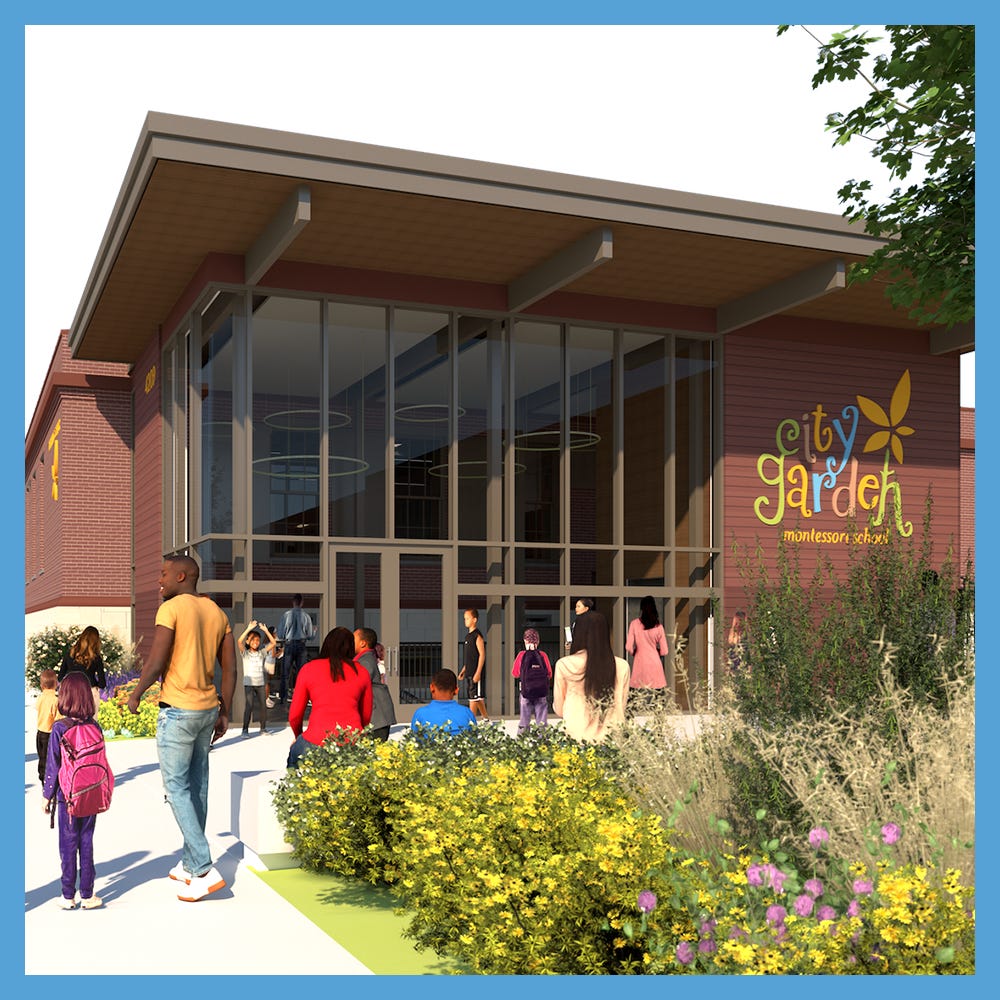
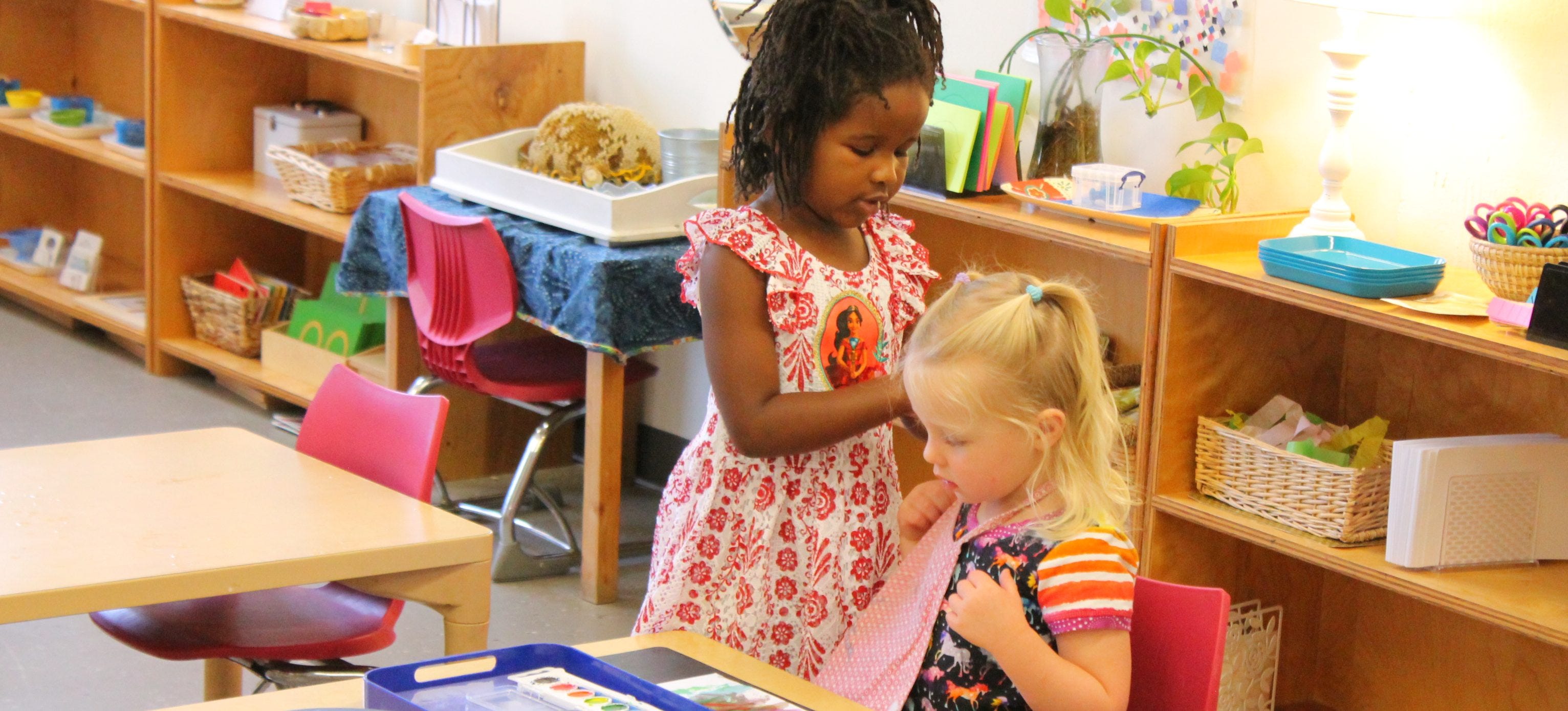
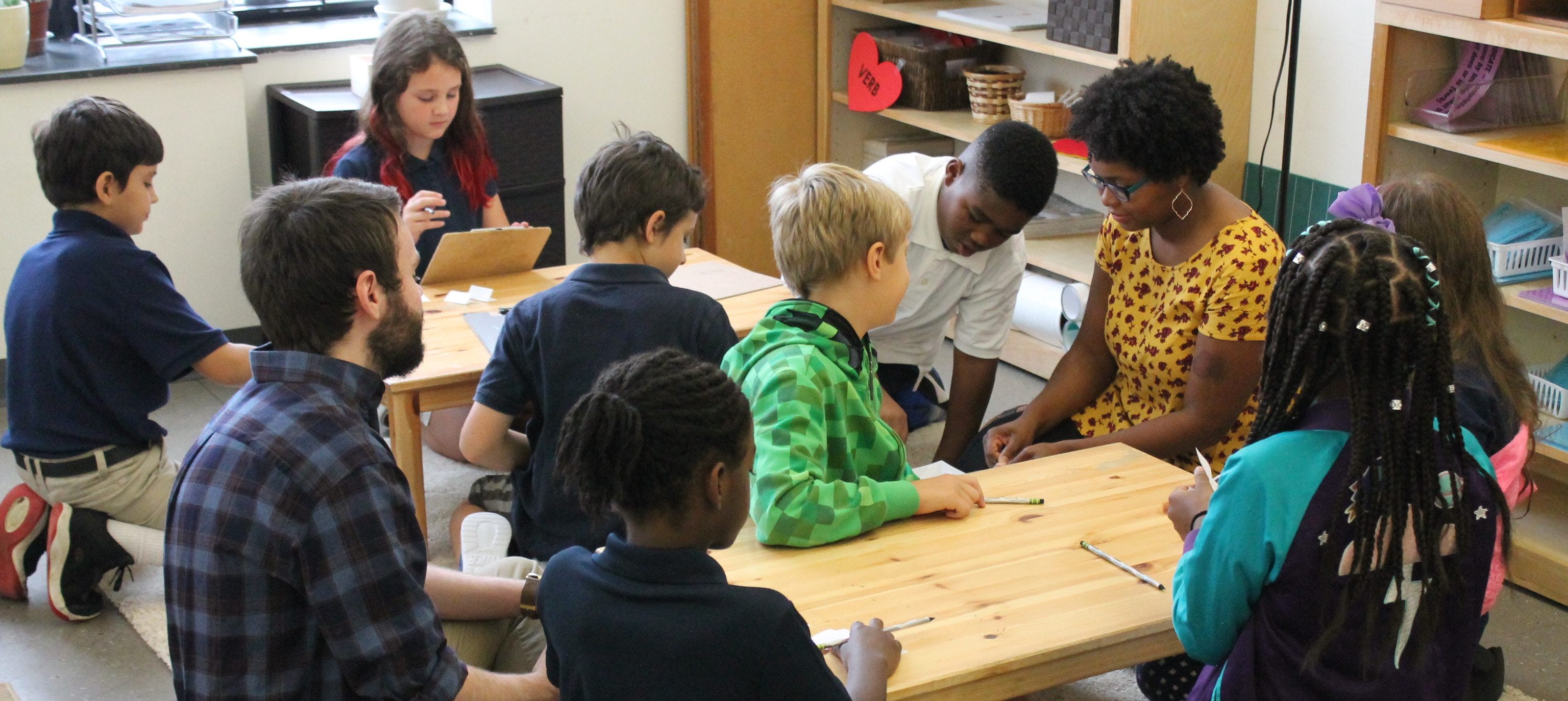
City Garden Montessori School is a public Montessori school in St. Louis, Missouri—deeply rooted in place, committed to equity, and animated by the belief that children learn best when they are trusted, known, and challenged.
That means half of every paid ANEW subscription in February will directly support City Garden’s work with children, families, and educators in the city of St. Louis.
Please know this:
Supporting ANEW always means supporting children at promise—while sustaining the writing and extending its reach beyond the page.
If you’re already a paid subscriber, thank you. Truly. Your support makes this possible.
And if you’ve been reading quietly and wondering whether to step a little closer—
this is an open door.
With gratitude,
Brian